
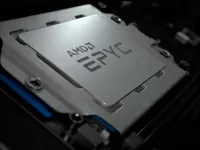
What are the chances of AMD in the server market? Expert opinion and Analytics
Why is AMD pinning its hopes on the second generation of processors, announced on August 7, 2019, and are these hopes destined to come true? We will take a short digression into the history, and see why it happened with Opteron-s, and how the server market has changed during the absence of AMD on it.
This article is the first in a series of analytical reviews devoted to AMD's server strategy, its processors, technologies, and the overall server ecosystem»
"EPYC" History
Since the ...
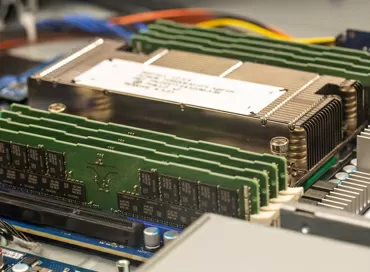
What CPU uses Cloudflare: intel not inside!
The heaviest loads on the CloudFlare network are Firewall and serverless services, which makes CPU the most expensive item in The cloudflare server budget. The company's approach to server design is very different from traditional content delivery networks designed for large object video libraries, and the 10th generation of servers meets these requirements.
We designed and built the Cloudflare network in such a way that we could quickly and inexpensively increase bandwidth; so that any of our ...
How memory encryption in AMD EPYC 7000 works, or how it protects your cloud
How SME, TSME and SEV technologies work, what security threats they protect, what hypervisors they support, how bugs are closed, and what software developers and cloud providers think about it. We brought in experts, sorted out the issue and ran performance tests
Let’s give a simple analogy: if your company’s data is money, then earlier the physical server on which they were stored was a protected safe: a closed piece of iron with a password, located behind three locks and under protection. ...

OAM format for OCP and Intel Nervana NNP L-1000 platforms
Last week, Facebook introduced a new form factor, the Open Accelerator Module, designed to accommodate ASIC processors that will eventually replace GPUs in machine learning. Today, such processors are being developed not only by Nvidia, but also by Intel, Google and many other companies.
Facebook not only buys hardware, but is also developing a new data center standard known as the Open Compute Project to achieve high data density and efficient heat dissipation when you have thousands of ...
NVMEoF: how does the fastest data protocol work?
In recent years, we have seen an increase in the performance of data storage technologies, which eventually reached the physical limits due to outdated data exchange protocols in data centers. Despite the use of 100GbE and new networking technologies such as InfiniBand, these legacy protocols continue to slow down the performance of flash drives because they are isolated within devices. In this article, we will talk about the non-Volatile Memory Express (NVMe) specification. Next, we'll focus on ...
Neuromorphic future: an attempt to put the brain in the server
In this article, we will talk about alternatives to following Moore's law, and which technologies can be used in data centers of the future.
Until today, processor manufacturers have been forced to follow Moore's law in order to produce a new generation of chips with higher performance and lower power consumption. In our time, the picture of the world has changed. Research around the world suggests a wide variety of architectures that are more productive and consume less energy. In this ...

Freebies will not be! VMware waives the license for the socket
It happened! Now, for every 32 physical cores in the server, you will need a license for 1 processor socket. Bad news for AMD, but don't jump to conclusions - there's still time to buy EPYC.
I hope you had time to enjoy how your new 1-socket server on AMD EPYC smartly replaces 2 or even 4 old servers on Xeon E5, and at the same time you deduct a mere penny for the hypervisor license? The freebie is over: now VMware changes the license policy, considering that there are no more than 32 cores ...
Smart chips will smooth the rejection of Moore's law in data centers
Amdahl's law sets a practical limit to the benefit of parallelization, so that further acceleration is possible simply by redefining the General problem in such a way as to make previously serialized operations parallelizable.
So if Moore's law slows down and we can't count on faster processors being released every year, what does that mean for data center technologists and architects?
Obviously, one of the areas in which chip production will develop is multi-chip packaging, where many ...
Qualcomm Cloud AI 100 AI accelerators for data centers
Today, Qualcomm announced that they are entering the AI accelerator market with the Qualcomm Cloud AI 100 family of chips. Designed from the ground up for the artificial intelligence market, this chip should be released as early as 2020. At the same time, Qualcomm emphasizes that the new chip will be compatible with existing software for artificial intelligence applications.
The new market, which did not exist at the beginning of this decade, has become the center around which all modern ...