
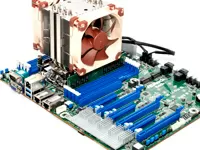
Review of ASRock Rack EPYCD8-2T server motherboard for AMD EPYC 7000
The good thing about the AMD EPYC 7000 platform is that a large number of PCI Express lanes are available to you in 1-socket format. This is a serious advantage for assembling a server with several GPUs, because the 1-processor layout allows you to assemble compact machines in the ATX form factor.
The good thing about the AMD EPYC 7000 platform is that a large number of PCI Express lanes are available to you in 1-socket format. This is a serious advantage for building a server with several ...
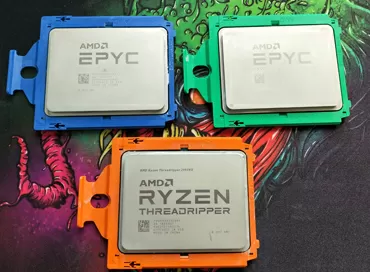
Threadripper vs. EPYC: testing three AMD 32-core processors in server applications
... Difference between SoC and traditional CPU
Closing your eyes and holding ... , and Threadripper is a CPU that still needs a chipset ... can't hold back), supports CPU and memory overclocking, and ... in the world where the CPU frequency is of decisive ... which has
memory encryption options
, and EPYC Rome added register encryption (!), significantly ... to note that CloudFlare chose the record-fast EPYC Rome for ... minimum value will load the cpu as much as possible. ... lose by choosing a gaming cpu instead of a server ...
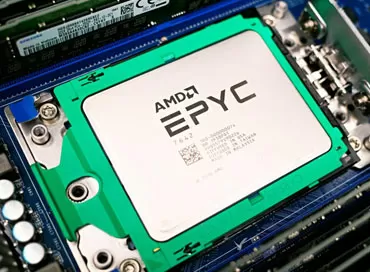
EPYC hosting: exploring how AMD is changing the VDS hosting market
... even the well-known service CloudFlare does not have not only ... company's economy is completely CPU dependent
When choosing a ... , because on average, one CPU core should bring 4.28 ...
Intel
AMD
AMD
AMD
Max. CPU frequency, GHz **
3.2 ... characteristics of 64-core EPYC
Model
AMD EPYC 7702
AMD EPYC 7662
AMD EPYC 7742
Number of ... can scale everything except the CPU frequency.
When it comes ... correct parameter when choosing a CPU for the Cloud segment ... the thermal package of each CPU is 200 watts This ...
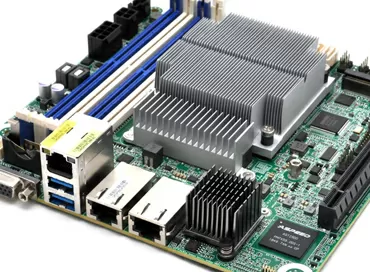
How Good Is The AMD EPYC 3251? Review of ASRockRack EPYC3251D4I-2T Mini-ITX motherboard
Twice as fast as a Xeon of the same class, twice as cold and nearly twice as cheap. A Mini-ITX motherboard with one of the most mysterious processors in the modern world, ideal for a small node of a small company.
I was looking forward to the opportunity to test AMD EPYC 3000, and here's why: EPYC 7000 series processors, both on the first generation core (Napples) and on the second generation (Rome), are a real hit and a breakthrough in the world of cloud computing and virtualization ... But ...
What factors should be used to choose the server processor?
Why when choosing a processor, do not pay attention to the price per core or the price per Watt, but rather use the cost of a Megahertz with HT disabled and using Turbo Boost?
Here's how it used to be good: for servers, there was a single Pentium Pro processor, which you didn't need to choose. With the advent of multi-core processors, it became clear that the more computing blocks, the better, but only until marketers stepped in and pided one CPU into ten sockets with ten cache options and ...
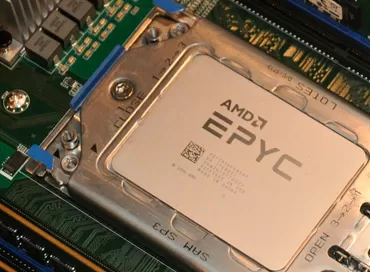
Guide for migration from Intel Xeon to AMD EPYC: debunking myths, avoiding pitfalls
Ordinary system administrators and large IT-directors, when it comes to AMD, sometimes ask completely childish questions, and we answer them. Existing stack compatibility, TCO reduction, performance and support issues.
Consider a typical situation: in your company, it’s time to expand your data center, or replace outdated equipment, and your supplier suggests that you consider a server on an AMD EPYC (ROME) processor. It does not matter whether you have already made a decision or are just ...
What are the chances of AMD in the server market? Part II
To successfully return to the server market, AMD decided to unify production as much as possible, linking together the principles of the Zen microarchitecture, the ideology of the chip and the final Assembly of processors
Chapter 1. Architecture and production strategy
This material is the second article in a series of analytical reviews on the server
AMD strategy, its processors, technologies and overall server “ecosystem”.
To successfully return to the server market, AMD needed to optimize ...
What are the chances of AMD in the server market? Expert opinion and Analytics
Why is AMD pinning its hopes on the second generation of processors, announced on August 7, 2019, and are these hopes destined to come true? We will take a short digression into the history, and see why it happened with Opteron-s, and how the server market has changed during the absence of AMD on it.
This article is the first in a series of analytical reviews devoted to AMD's server strategy, its processors, technologies, and the overall server ecosystem»
"EPYC" History
Since the ...
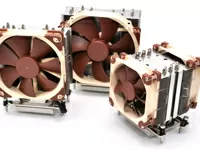
Comparison of three Noctua coolers for workstations based on AMD EPYC 7000
Due to the gigantic dimensions of the socket, coolers for TR4 / SP3, as a rule, are placed in a separate category and are not compatible with anything else (this does not apply to SVO). We'll compare the top three Noctua remote cooling systems and see how they differ from each other.
AMD EPYC processors have a multicrystal layout (so-called chiplets), which makes the CPU bulky in terms of size, and, apparently, the tendency to increase their CPU size will continue in the future. Since the ...
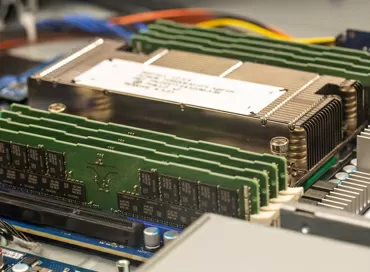
What CPU uses Cloudflare: intel not inside!
... the CloudFlare network are Firewall and serverless services, which makes CPU the ... most expensive item in The cloudflare server budget ... servers, and even between logical CPU threads inside the server.
... change again over time.
CPU efficiency is very important for ... servers usually rely on CPU performance. The Cloudflare software stack scales fairly ...
We have deployed AMD EPYC 7642-based servers in six Cloudflare data centers ... servers traditionally depends on the CPU, in the Gun X ...