

Short and clear: which type of Nextcloud installation should I choose - LXC, VM or Docker?
Nextcloud is a popular solution for creating your own cloud data storage. In this article, we will look at various ways to install Nextcloud, their pros and cons. To begin with, there are several ways to install Nextcloud: directly on the server, in a virtual machine, in Docker manually or in Docker via the automatic AIO stack. You can also install Nextcloud in an LXC container.
Nextcloud is a popular solution for creating your own cloud data storage. In this article, we will look at various ...
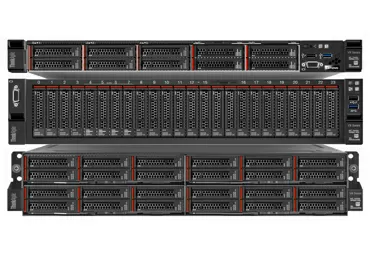
Lenovo ThinkAgile VX3320 review - a hyperconverged solution for simplified enterprise-wide vSAN deployment
... ideology of hyperconvergent solutions using VMware technologies has its advantages: this ... of hyperconvergent systems, especially in comparison with outdated approaches. This is ... selected equipment is compatible with VMware products in general, vSAN technology ... offers solutions for both AMD EPYC-based infrastructures and Intel Xeon ... hybrid clouds in the company, VMware Cloud Foundation (VCF) can be used ... combines VMware vSphere 7, VMware vSAN, VMware NSX-T, VMware vRealize Suite and VMware Tanzu ...
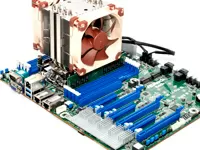
Review of ASRock Rack EPYCD8-2T server motherboard for AMD EPYC 7000
The good thing about the AMD EPYC 7000 platform is that a large number of PCI Express lanes are available to you in 1-socket format. This is a serious advantage for assembling a server with several GPUs, because the 1-processor layout allows you to assemble compact machines in the ATX form factor.
The good thing about the AMD EPYC 7000 platform is that a large number of PCI Express lanes are available to you in 1-socket format. This is a serious advantage for building a server with several ...

Quarkus deconstructed: building modernized Java for the future
Quarkus is driving Java-based applications and services into the future. More specifically, the Quarkus framework is helping to drive Java-coded assets into a future that is positively populated with the computing advantages that come from the use of serverless, cloud and Kubernetes environments.
Quarkus is driving Java-based applications and services into the future. More specifically, the Quarkus framework is helping to drive Java-coded assets into a future that is positively populated ...
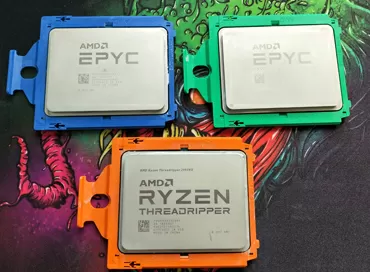
Threadripper vs. EPYC: testing three AMD 32-core processors in server applications
32 cores is where you can still get by with a 1 VMware socket license, and therefore the processor must be the fastest in the world! We will test 6 server applications, including 1C Enterprise, MySQL and NGINX, to choose the best!
After the recent decision by VMware to change the licensing policy of Its ESXi hypervisor by accepting a limit of 32 physical cores per 1 processor socket, the 32-core milestone has become the front line where AMD reigns Supreme, and if today you choose a 32-core ...
EPYC hosting: exploring how AMD is changing the VDS hosting market
Today, hosters can place up to 1024 virtual machines on one machine, which allows them to dump, increasing their client base in a highly competitive environment. We'll explore why AMD's 64-core EPYC processors are at the heart of a new look at VDS.
The data center market demonstrates double-digit growth y/y together with the incessant exponential growth of information on the Internet. Today, own “VDS-point in the cloud” has become as commonplace for modern active people as a credit card ...
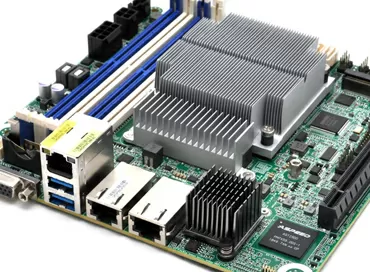
How Good Is The AMD EPYC 3251? Review of ASRockRack EPYC3251D4I-2T Mini-ITX motherboard
Twice as fast as a Xeon of the same class, twice as cold and nearly twice as cheap. A Mini-ITX motherboard with one of the most mysterious processors in the modern world, ideal for a small node of a small company.
I was looking forward to the opportunity to test AMD EPYC 3000, and here's why: EPYC 7000 series processors, both on the first generation core (Napples) and on the second generation (Rome), are a real hit and a breakthrough in the world of cloud computing and virtualization ... But ...
Guide for migration from Intel Xeon to AMD EPYC: debunking myths, avoiding pitfalls
... comparison for a 32-core server
Component/Server
AMD EPYC
Xeon ... Comparison of software licensing costs for selected servers
1 x AMD EPYC ... , Unlimited
1890 $
3780 $
VMWare vSphere Standard with Basic Support ... VMWare vSphere
Since AMD EPYC is native to the clouds, all cloud ... Business Solutions Architect "
VMware
" (Russia).
VMware vSphere contains functionality that ... VMware or in Nicaragua on Windows.
Absolutely another matter-cloud ... interesting for a simple comparison of the cost of ...
What are the chances of AMD in the server market? Part II
... tasks for comparison. The undeniable advantages of EPYC 7001 in ... VMware’s per-socket licensing, due to which AMD EPYC processors ... the demand from hyperscalers, cloud providers and regional hosting ... (AWS), Microsoft Azure, Oracle Cloud, Dropbox, Packet, Chinese Baidu ... least three Azure cloud configurations on the EPYC 7001, including ... Data, and Cloud computing) to single-socket EPYC platforms.
Without ... attractive solution in virtualization applications, cloud containers, high-security environments, ...
What are the chances of AMD in the server market? Expert opinion and Analytics
Why is AMD pinning its hopes on the second generation of processors, announced on August 7, 2019, and are these hopes destined to come true? We will take a short digression into the history, and see why it happened with Opteron-s, and how the server market has changed during the absence of AMD on it.
This article is the first in a series of analytical reviews devoted to AMD's server strategy, its processors, technologies, and the overall server ecosystem»
"EPYC" History
Since the ...