
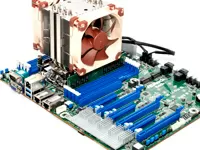
Review of ASRock Rack EPYCD8-2T server motherboard for AMD EPYC 7000
The good thing about the AMD EPYC 7000 platform is that a large number of PCI Express lanes are available to you in 1-socket format. This is a serious advantage for assembling a server with several GPUs, because the 1-processor layout allows you to assemble compact machines in the ATX form factor.
The good thing about the AMD EPYC 7000 platform is that a large number of PCI Express lanes are available to you in 1-socket format. This is a serious advantage for building a server with several ...

Article about vertical wall-mounting of servers
An interesting solution for home laboratories, small test rooms or maintenance-free points where 1-2-3 pieces of equipment are placed, and every square centimeter is worth its weight in gold
I often came up with the idea: why not place servers vertically, because if you do not have a special server rack, but have a 1U-4U machine, and even a full length of 655 mm, then this bandura will take up the entire room, the entire table or rack. No, I'm not saying that server cabinets are outdated and ...
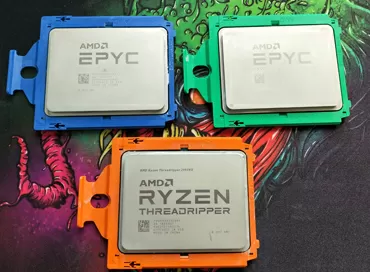
Threadripper vs. EPYC: testing three AMD 32-core processors in server applications
32 cores is where you can still get by with a 1 VMware socket license, and therefore the processor must be the fastest in the world! We will test 6 server applications, including 1C Enterprise, MySQL and NGINX, to choose the best!
After the recent decision by VMware to change the licensing policy of Its ESXi hypervisor by accepting a limit of 32 physical cores per 1 processor socket, the 32-core milestone has become the front line where AMD reigns Supreme, and if today you choose a 32-core ...
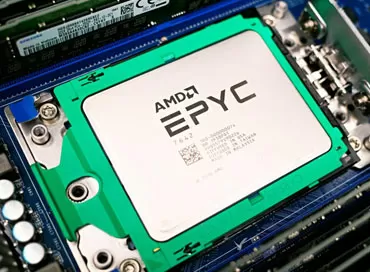
EPYC hosting: exploring how AMD is changing the VDS hosting market
Today, hosters can place up to 1024 virtual machines on one machine, which allows them to dump, increasing their client base in a highly competitive environment. We'll explore why AMD's 64-core EPYC processors are at the heart of a new look at VDS.
The data center market demonstrates double-digit growth y/y together with the incessant exponential growth of information on the Internet. Today, own “VDS-point in the cloud” has become as commonplace for modern active people as a credit card ...
What factors should be used to choose the server processor?
Why when choosing a processor, do not pay attention to the price per core or the price per Watt, but rather use the cost of a Megahertz with HT disabled and using Turbo Boost?
Here's how it used to be good: for servers, there was a single Pentium Pro processor, which you didn't need to choose. With the advent of multi-core processors, it became clear that the more computing blocks, the better, but only until marketers stepped in and pided one CPU into ten sockets with ten cache options and ...
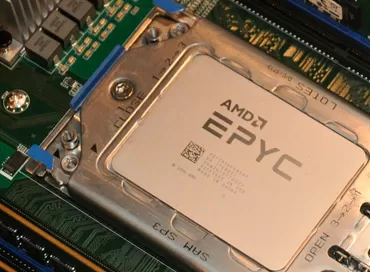
Guide for migration from Intel Xeon to AMD EPYC: debunking myths, avoiding pitfalls
Ordinary system administrators and large IT-directors, when it comes to AMD, sometimes ask completely childish questions, and we answer them. Existing stack compatibility, TCO reduction, performance and support issues.
Consider a typical situation: in your company, it’s time to expand your data center, or replace outdated equipment, and your supplier suggests that you consider a server on an AMD EPYC (ROME) processor. It does not matter whether you have already made a decision or are just ...
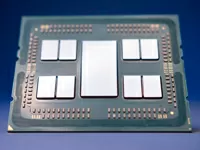
What are the chances of AMD in the server market? Part II
... its processors, technologies and overall server “ecosystem”.
To successfully return ... The topology of the EPYC 7001 series server processor codenamed Naples (Naples ... ) is as follows:
EPYC 7001 series server processors are multi-chip ... the ideologies of modular processors using chiplets (MCM, SoC) and ... historically trained the market to buy higher-end processors, limiting ... , which forces customers to buy more expensive versions of chips ... much more expensive version of Datacenter*.
There are exceptions on ...
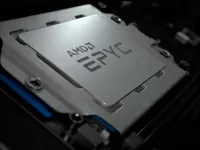
What are the chances of AMD in the server market? Expert opinion and Analytics
Why is AMD pinning its hopes on the second generation of processors, announced on August 7, 2019, and are these hopes destined to come true? We will take a short digression into the history, and see why it happened with Opteron-s, and how the server market has changed during the absence of AMD on it.
This article is the first in a series of analytical reviews devoted to AMD's server strategy, its processors, technologies, and the overall server ecosystem»
"EPYC" History
Since the ...
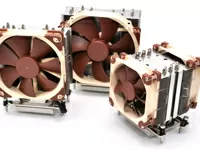
Comparison of three Noctua coolers for workstations based on AMD EPYC 7000
Due to the gigantic dimensions of the socket, coolers for TR4 / SP3, as a rule, are placed in a separate category and are not compatible with anything else (this does not apply to SVO). We'll compare the top three Noctua remote cooling systems and see how they differ from each other.
AMD EPYC processors have a multicrystal layout (so-called chiplets), which makes the CPU bulky in terms of size, and, apparently, the tendency to increase their CPU size will continue in the future. Since the ...
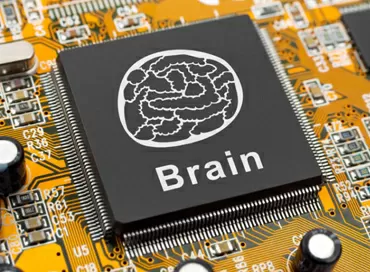
Neuromorphic future: an attempt to put the brain in the server
In this article, we will talk about alternatives to following Moore's law, and which technologies can be used in data centers of the future.
Until today, processor manufacturers have been forced to follow Moore's law in order to produce a new generation of chips with higher performance and lower power consumption. In our time, the picture of the world has changed. Research around the world suggests a wide variety of architectures that are more productive and consume less energy. In this ...