10 things you need to know about SD-WAN
SD-WAN is the hottest new technology on the network, and many distributed organizations are already or will soon adopt this technology. We will give you 10 main points about SD-WAN technology that will allow you to make a decision about using it in your company.
The appeal of SD-WAN is that it combines multiple physical WAN channels into a single logical network and provides traffic prioritization to speed up the performance of applications deployed in internal data centers and in the cloud. Using a network abstraction, SD-WAN allows you to save on connecting company branches via the Internet, instead of dedicated communication lines. In essence, SD-WLAN is a technology that distributes services, performs prioritization, and makes security settings on top of existing physical networks.
1#: save money
The economy of SD-WAN is to reduce costs for expensive WAN channels. With an average growth in WAN data volume of 20% per year, most organizations require more bandwidth for high-speed communication with remote offices. SD-WAN provides secure deployment of DSL, cable, Ethernet, wireless, and other Internet connections, either in combination with expensive MPLS connections or to replace them. On average, these Internet connections provide two to five times more bandwidth than similarly priced MPLS connections, which directly contributes to the return on investment in the SD-WAN device.
2#: improved reliability
SD-WAN allows you to transmit traffic over two or more independent WAN channels. In this way, it organizations can diversify their WAN connections to provide more reliable connectivity to their remote offices by Contracting with multiple communication service providers. This can be a combination of traditional MPLS providers, cable companies, and wireless firms. SD-WAN intelligence monitors communication channels and directs traffic to the most efficient one, depending on pre-set policies. Using a corporate LTE tariff, which usually includes unlimited traffic, can also act as a WAN reservation for remote offices.
3#: traffic identification and prioritization
Most organizations are quickly moving away from star WAN connections, where all traffic is redirected to a Central data center, and moving to direct point-to-point connections between the remote office and SaaS applications. SD-WAN allows it organizations to set application-and user-managed prioritization and security policies. SD-WAN detects the type of traffic coming in or out of the branch and directs it directly to the desired data center.
4#: the principle of Plug&Play
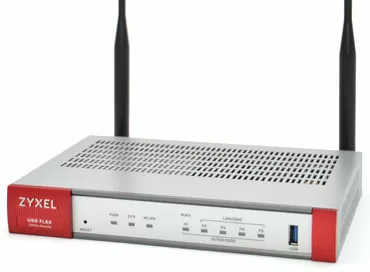
Most SD-WAN solutions are fairly easy to deploy in remote offices. An SD-WAN hardware device is usually installed in a rack, connected to an Ethernet port, and then configured remotely by an integrator or system administrator. All products have a learning curve in terms of setting traffic priorities, security policies, and orchestration methods. SD-WAN solutions should be easily integrated with existing network devices and network security products in the branch, but this configuration may take time.
5#: please Note that SD-WAN products from different vendors are not the same
SD-WAN Solutions use proprietary code, and every major network hardware vendor offers their own vision of how it should work. In the short term, it organizations should choose the SD-WAN solution that best meets their requirements and use pairs of remote and Central SD-WAN devices from the same manufacturer. If you use SD-WAN devices from different companies, your network will continue to work, but you will lose control flexibility.
6#: SD-WAN includes multi-cloud
Most it organizations use a combination of internal data centers, applications in public clouds, and users accessing SaaS applications. SD-WAN solutions have the ability to recognize and route cloud traffic flows. SD-WAN providers partner with leading IaaS providers to accelerate traffic to and from their local points of presence. SD-WAN solutions recognize the IP addresses of most of the leading SaaS providers and can route traffic accordingly.
7#: internal security
SD-WAN Solutions can protect unreliable Internet connections and detect abnormal traffic flows. Each SD-WAN provider has unique methods for providing VPN, firewall, whitelist, blacklist, encryption, and so on.Additional features may include content filtering, endpoint management, and policy enforcement. SD-WAN solutions must be compatible with existing network security products, such as next-generation firewalls.
8#: management, automation, and network orchestration (MANO)
For most SD-WAN solutions, management, orchestration, and automation tools are located in a centralized data center or in the cloud. Management, automation, and network orchestration (MANO) consoles for centralized it operators should be highly automated, but this often involves a learning process. SD-WAN MANO can also be challenging to integrate into existing network and application management systems, which is a prerequisite for fully automated application performance management.
9#: self-managed or managed service
It organizations can purchase solutions directly from the manufacturer of the SD-WAN hardware solution, or purchase managed SD-WAN services from a service provider. For some organizations, the correct solution is to integrate SD-WAN devices into the existing network infrastructure, including routers, access points, switches, and so on. But small companies can simply rent an SD-WAN from service providers.
10#: on the way to a programmatically defined branch
The software-defined branch (SD-Branch) uses the concepts of SDN and network virtualization to package all the most popular network requirements into a software solution running on a single platform. Its functionality includes: SD-WAN, routing, network security, and networking, both Ethernet and Wi-Fi. This feature can be ideal for it organizations with new offices and branches that are being moved or when updating existing branches.
Ron Amadeo
19/10.2019