
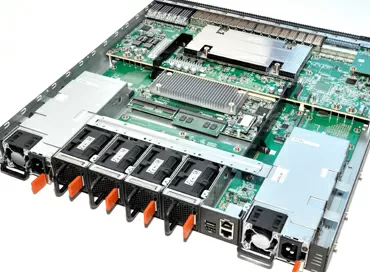
Zyxel CX4800-56f review: 100G Switch with high redundancy
The Zyxel CX4800-56F is a high-density L3 aggregation optical switch in which the company pioneered the use of 100G ports: 8 QSFP28 100GbE uplinks complement 48 SFP+/SFP28 slots with 10/25gbe support, forming a single 56-port stack for traffic aggregation in campus and data centers factories. With a pass-through switching matrix of up to 4 Tbit/s and forwarding speeds of up to 2 billion packets per second, this switch confidently closes scenarios of highly loaded highways, where not only ...
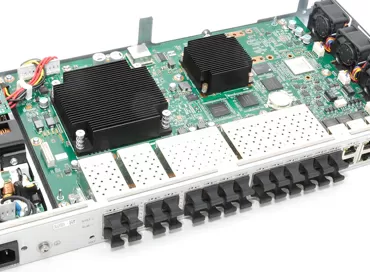
Huawei NetEngine 8000 review: Exploring the features of SRv6
... operators. Among them is the SRv6 routing protocol, which simplifies the ... that will define future networks.
SRv6 Technology
First of all, I ... would like to say about SRv6, the IPv6-based segment routing ... . Each router in the SRv6 network has its own SID ... pure form, it encapsulates an SRv6 header containing a stack of ... .
We can say that SRv6 allows you to lay the ... follows:
1 and 2 - SFP+/SFP ports 10G/1G/100M Ethernet in the ... business actively uses cloud infrastructure. SRV6 technology, which promises to be ...
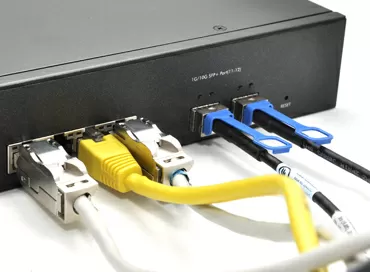
Zyxel XS1920-12 10 Gigabit Switch Review
When testing this switch, we first of all check compatibility with cables and network adapters, evaluate the quality of the element base, speed and impact on latency between ports.
When moving to a 10-gigabit network infrastructure, you are likely to come across two media: optical and copper. In the first case, these will most likely be backbone connections, and in the second, modern equipment, which usually has the 10Gbase-T standard. For these use cases, Zyxel has the XS1920, a 12-port ...
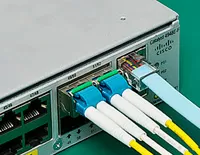
10GBASE-T and SFP+. What is better for 10GBe networking?
10-Gigabit networks are becoming more accessible and in demand every day, and today this technology is of interest to everyone, except for large data centers, where it has been used for more than 10 years. In this article, we will look at both types of 10-Gigabit interfaces: optics and copper, and show you the advantages and disadvantages of both types of connectivity.
The main direction of modernization of computer networks in recent years is the transition from a 1-Gigabit network to a 10- ...
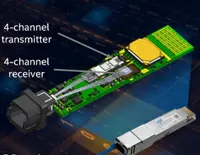
Intel's silicon Photonics leads to lower cost of 100G networks
For more than 10 years, Intel has been trumpeting the benefits of silicon Photonics, which has been under development for two decades. Intel itself has long adhered to the concept of unbundled computing and storage devices for data centers, combined through optics. During Intel Interconnect Day 2019, the company revealed that its silicon Photonics has grown from a lab project to a product ready to go to customers.
For more than 10 years, Intel has been trumpeting the benefits of silicon ...